Bean - Scarlet Runner
Bean - Scarlet Runner
Couldn't load pickup availability
Minimum Seed Count: 15
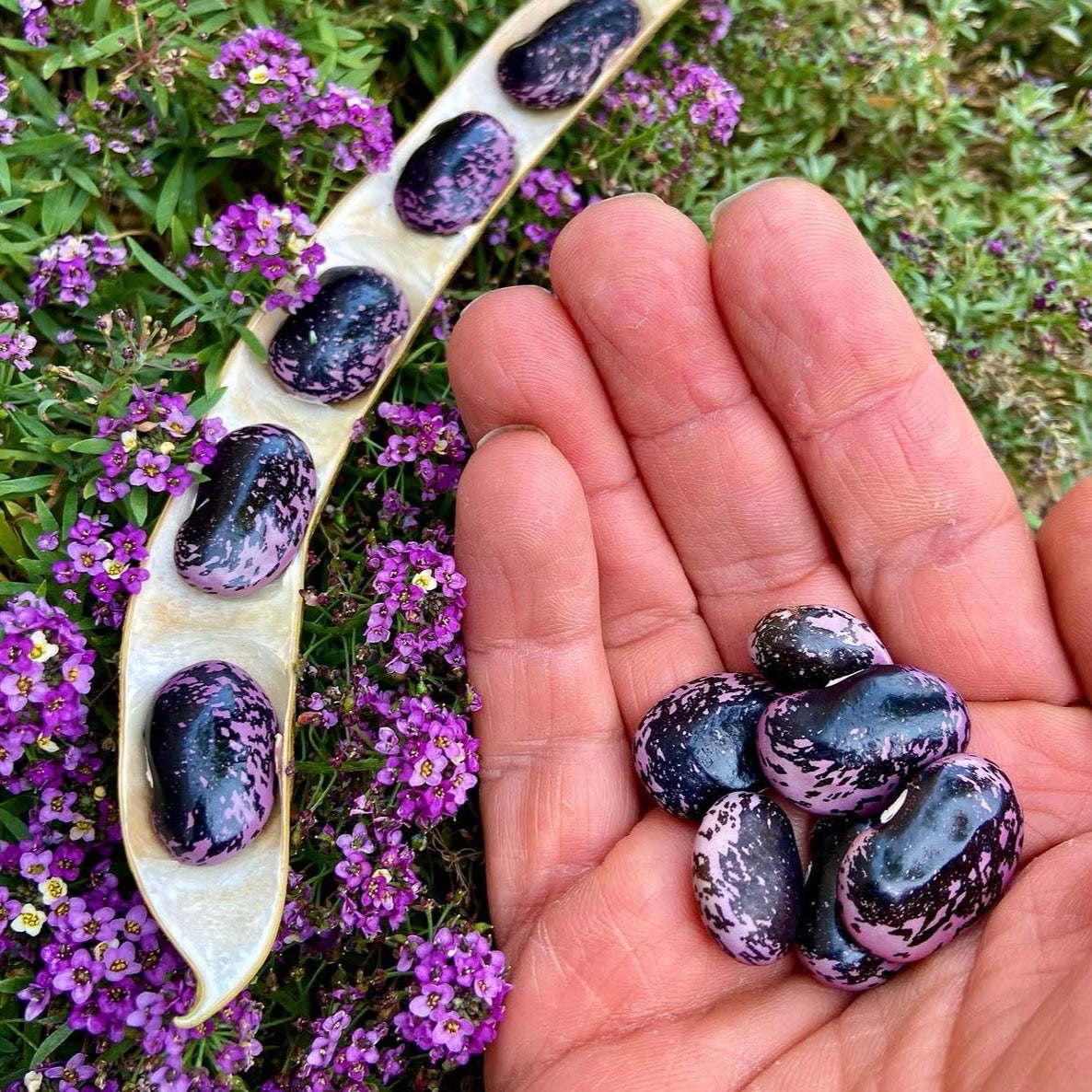
Part vegetable, part ornamental, and completely unforgettable. Scarlet Runner Bean is one of the most beautiful and versatile plants you can grow, not only producing brilliant scarlet-red flowers that attract hummingbirds, bees, and butterflies all summer long but also bright pink beans that later mature into dark purple with pink splotches! Originally cultivated in the mountains of Central America, this heirloom bean grows into vigorous climbing vines that can reach impressive heights while producing both edible pods and large, colorful beans.
Plant Details
- Species: Phaseolus coccineus
- Plant Type: Pole bean
- Days to Maturity: 65–80 days for pods, 90–120 days for dry beans
- Plant Height: 8–12+ feet
- Flower Color: Bright scarlet-red
- Growth Habit: Vigorous climbing vines
Growing Guide
Starting Seeds
- Direct sow outdoors after all danger of frost has passed.
- Plant seeds 1–1½ inches deep.
- Beans germinate best in warm soil above 60°F.
Planting
- Choose a location with full sun to partial shade.
- Space seeds 4–6 inches apart.
- Provide a sturdy trellis, fence, archway, or pole for vines to climb.
- Plant in fertile, well-drained soil.
Growing Conditions
- Full sun for best flowering and production
- Rich, well-drained soil
- Consistent moisture throughout the growing season
- Benefits from mulching during hot weather
Care
- Water regularly, especially during flowering and pod development.
- Avoid excessive nitrogen fertilizer, which can promote leaves at the expense of flowers and pods.
- Train young vines onto supports as they begin climbing.
Harvesting
- Pick young pods when tender for fresh eating.
- Allow pods to mature for shelling beans or dry beans.
- Frequent harvesting encourages continued flowering and production.
History
Scarlet Runner Beans originated in the highlands of Mexico and Central America, where they have been cultivated for centuries. Unlike common garden beans, runner beans are often grown as perennial plants in their native climate. They were introduced to Europe in the 1600s and quickly became popular for their spectacular flowers as well as their edible beans. Today, Scarlet Runner Beans remain a favorite among gardeners who want a plant that is both productive and beautiful.
Share