
Melon - Rich Sweetness 132
Melon - Rich Sweetness 132
4.24 / 5.0
(76) 76 total reviews
Couldn't load pickup availability
Minimum Seed Count: 10
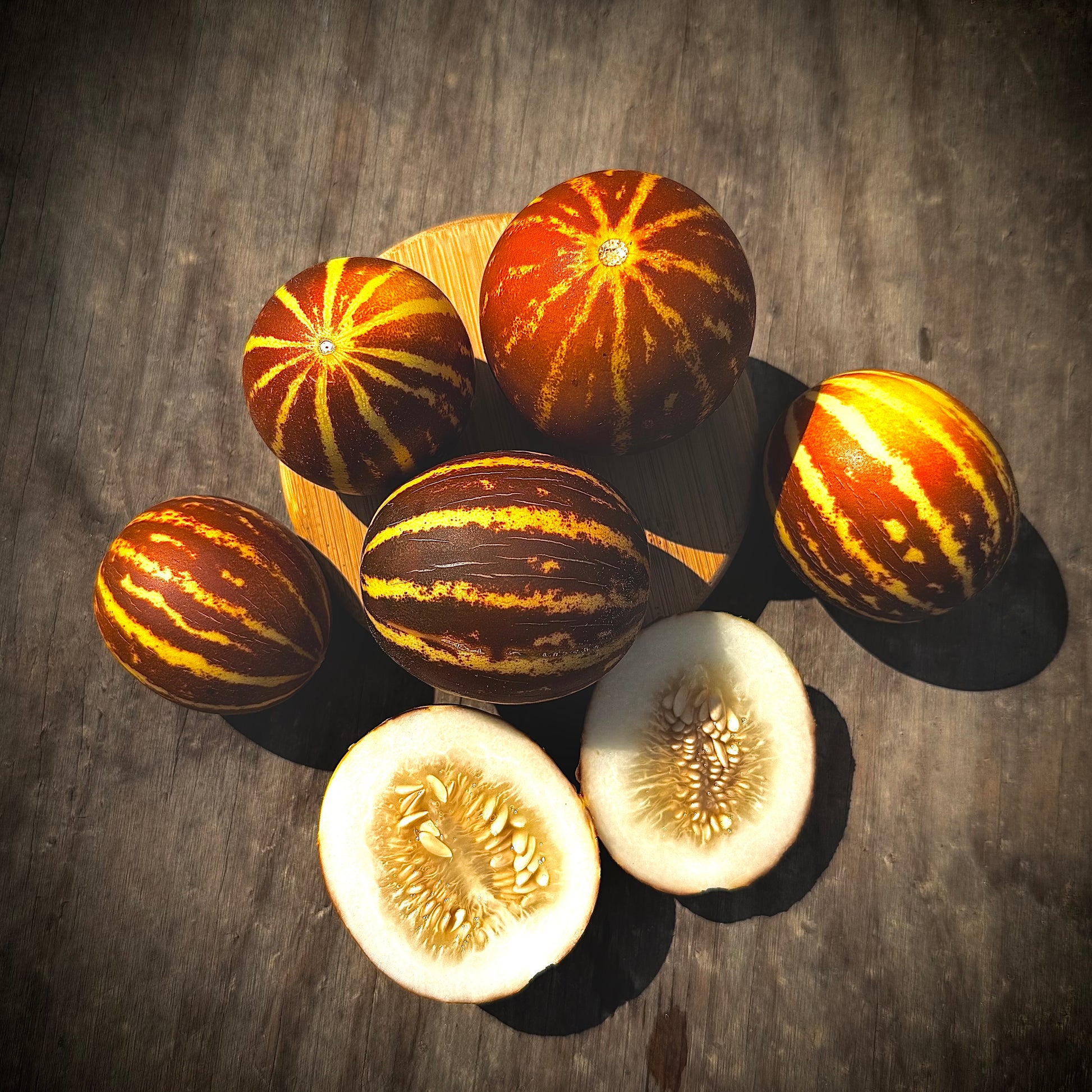
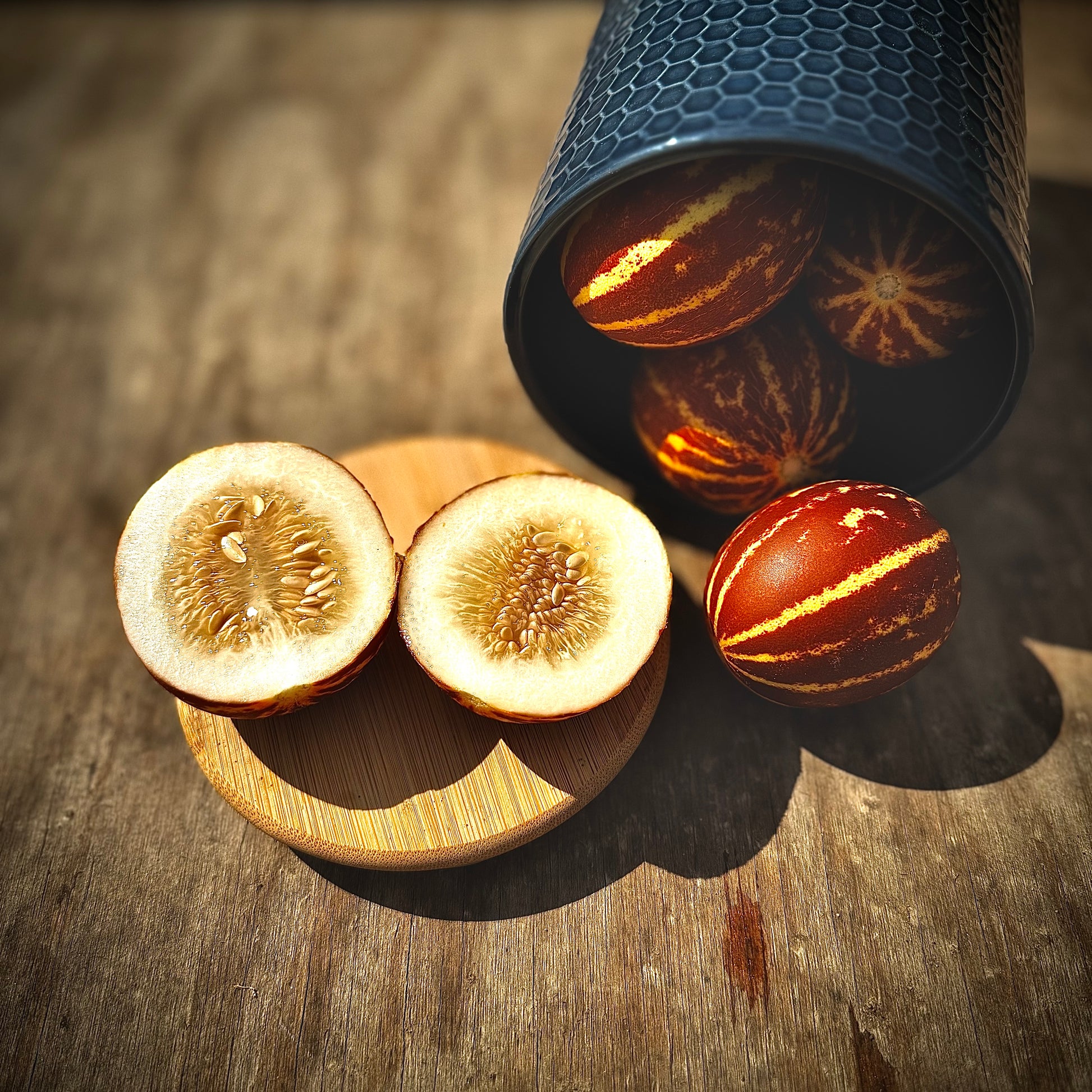
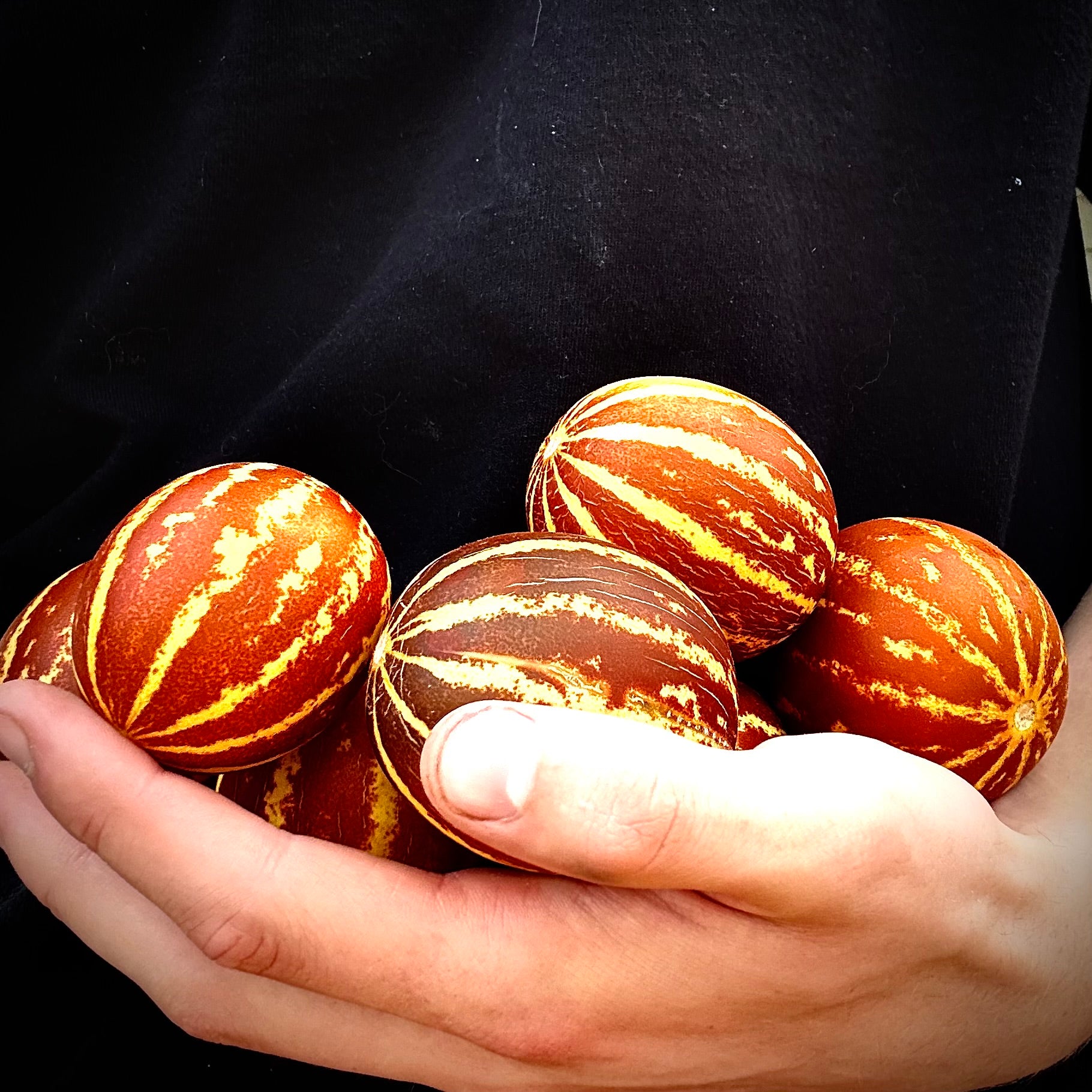
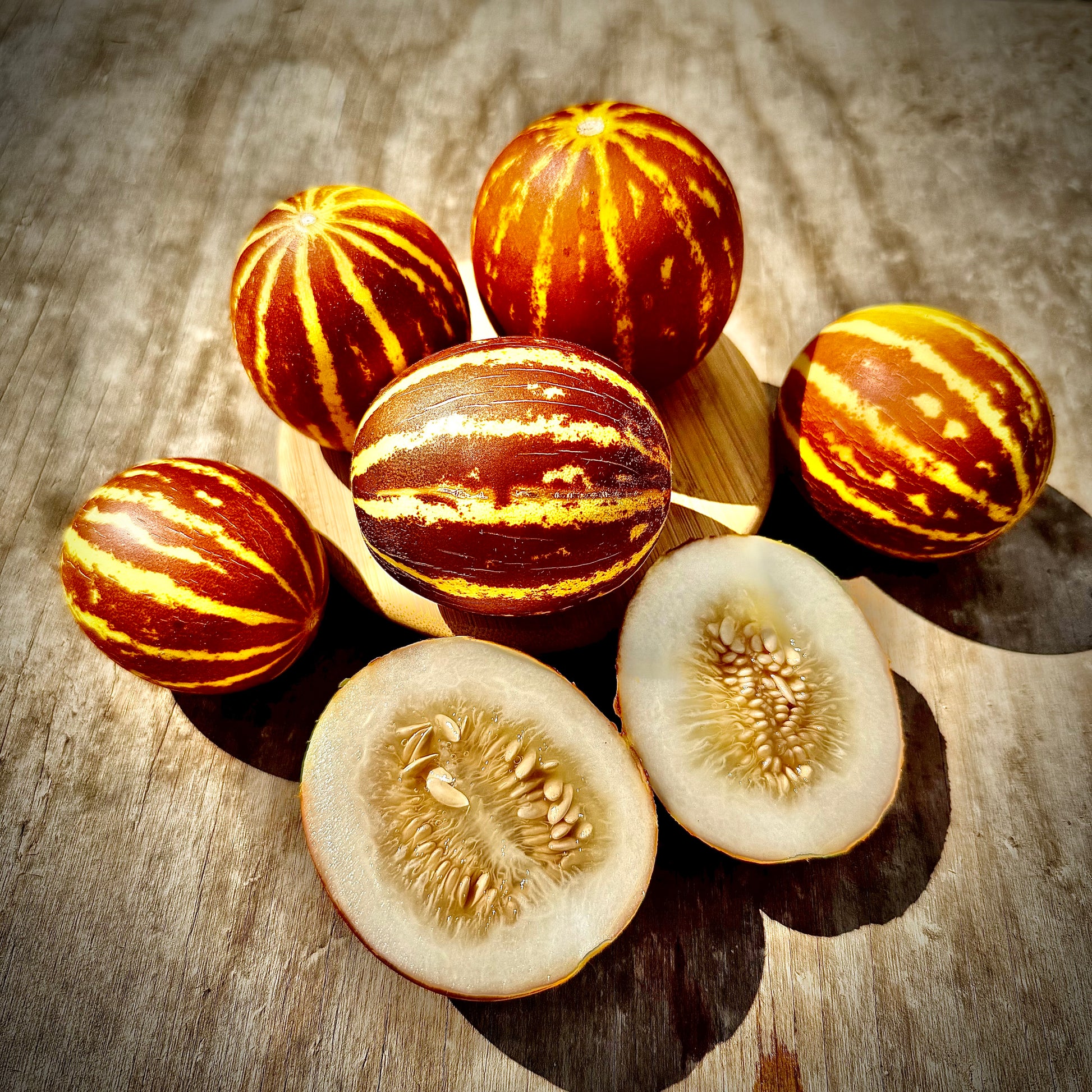
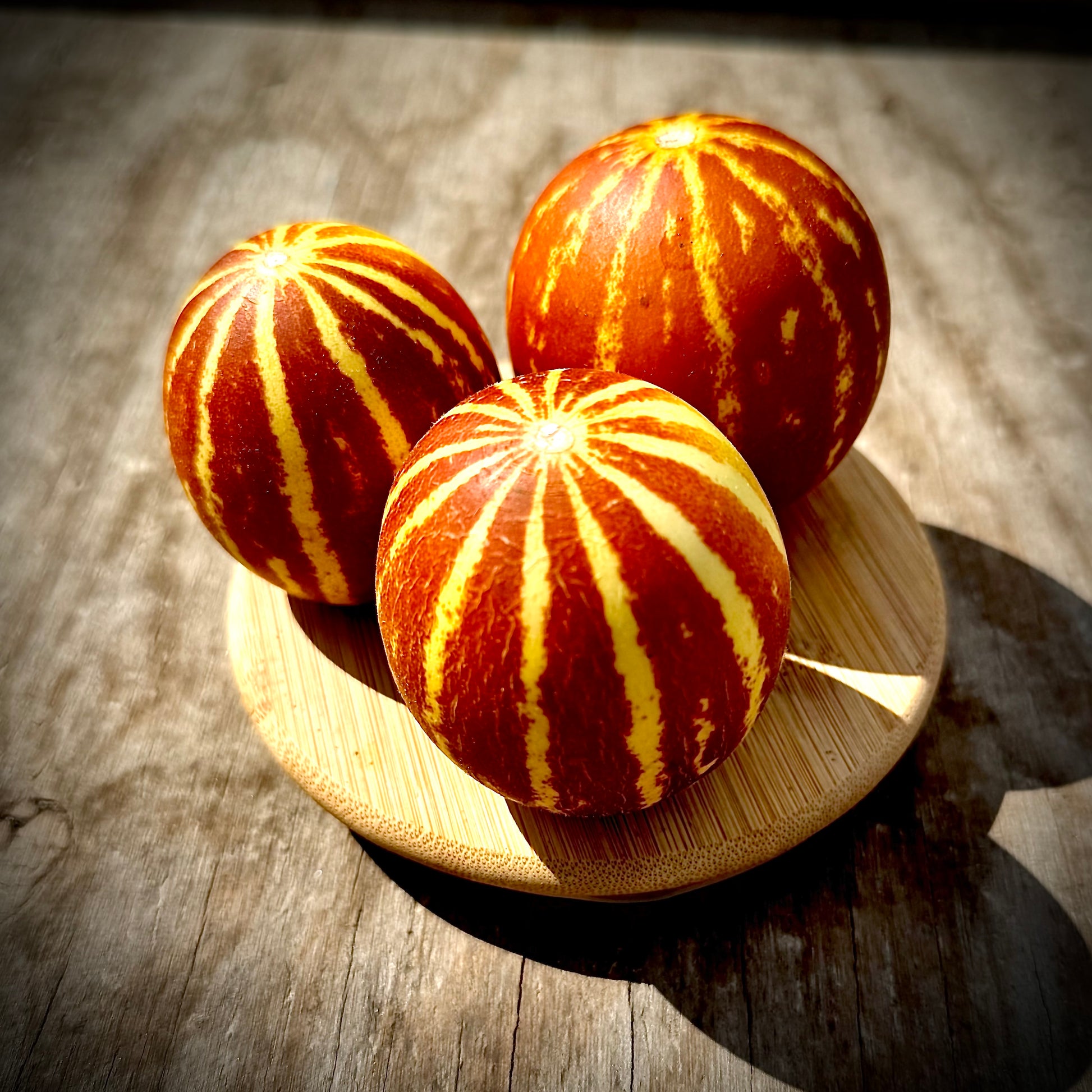
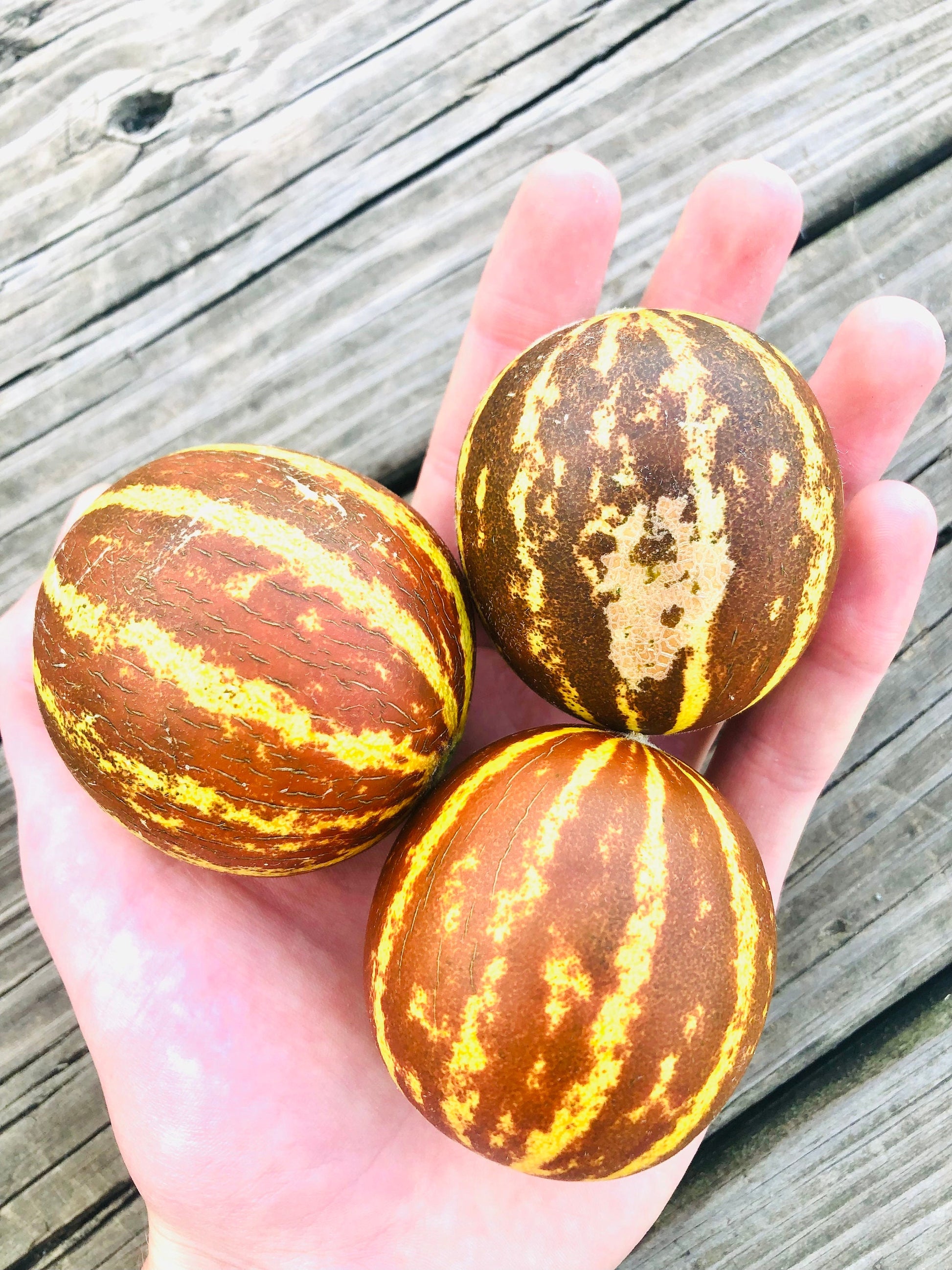
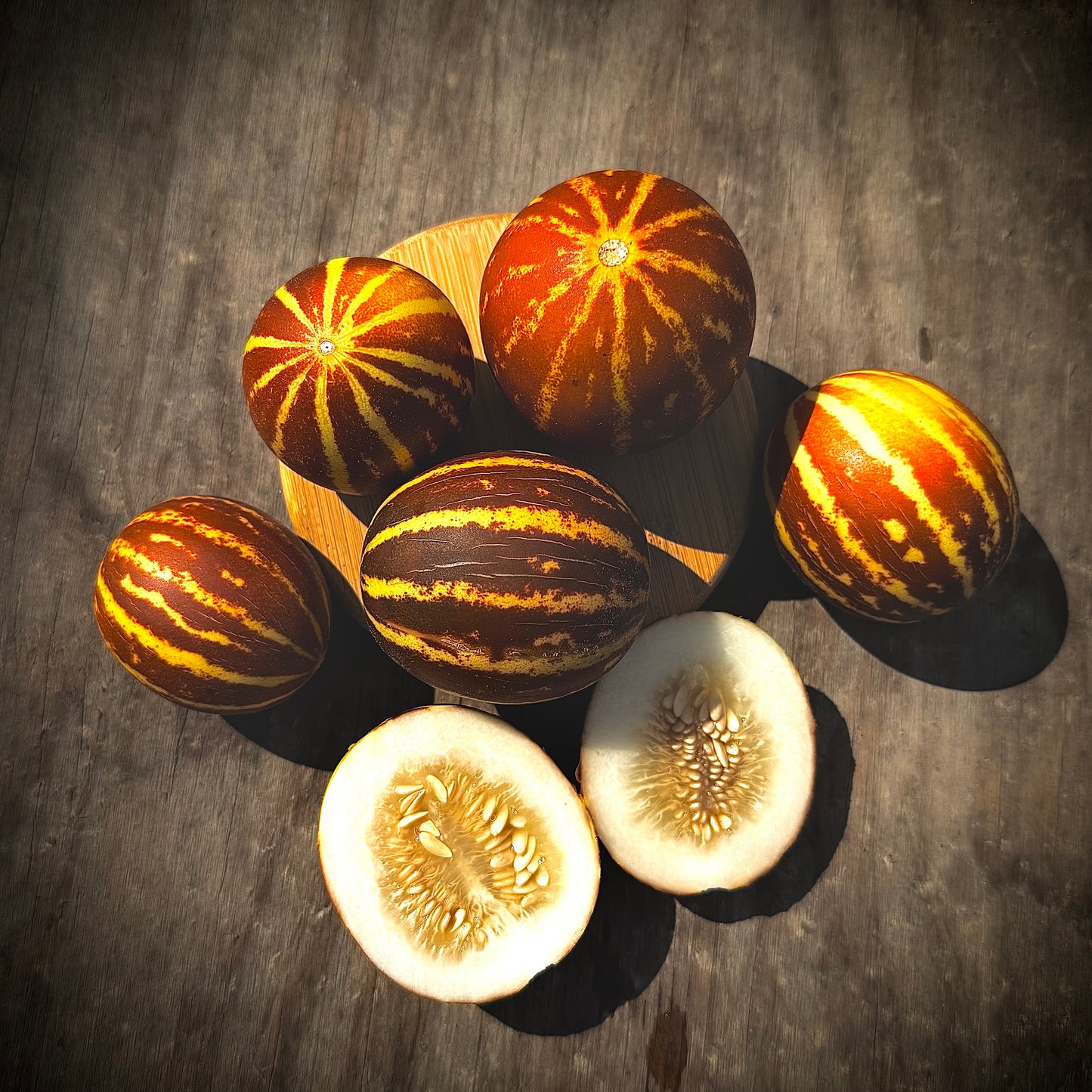
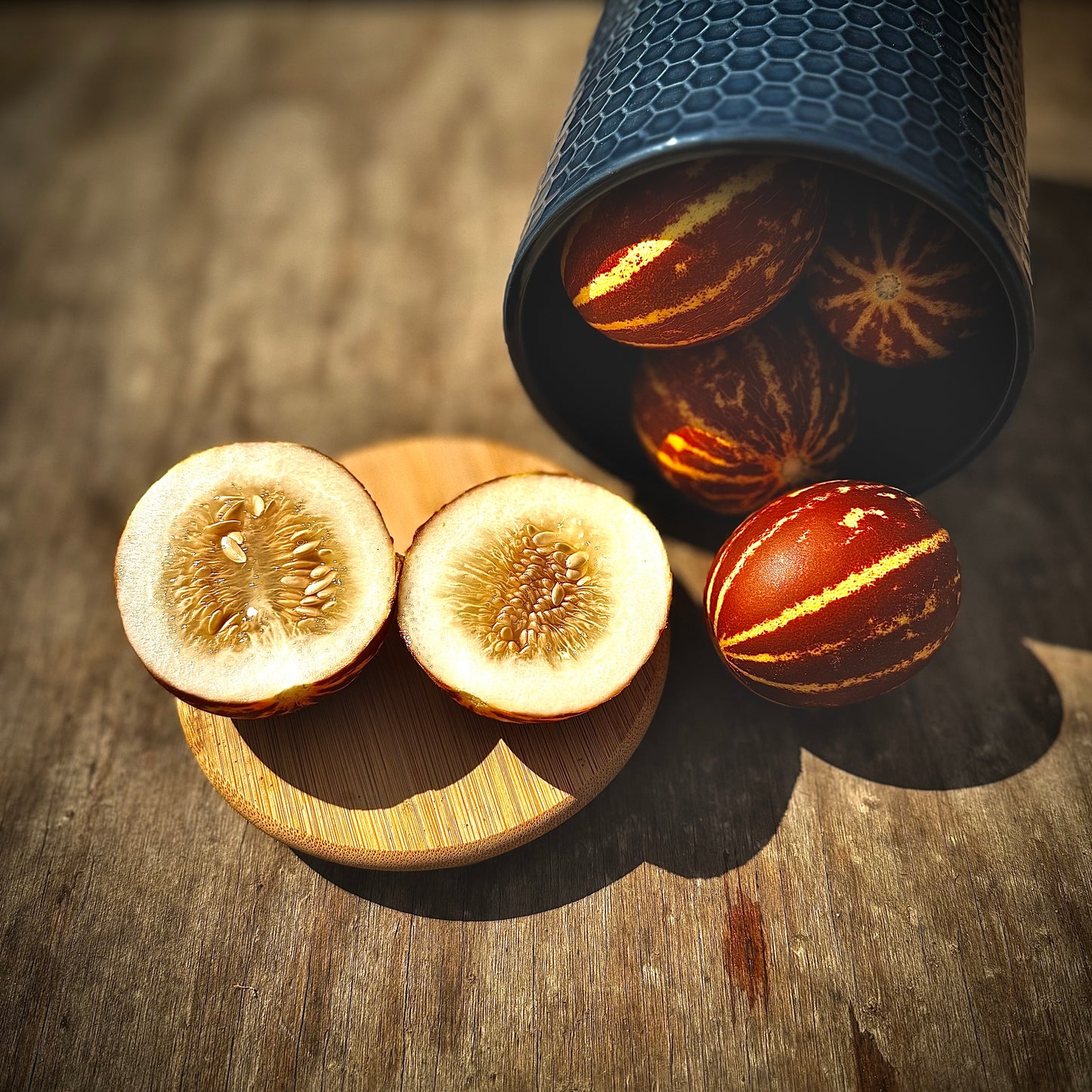
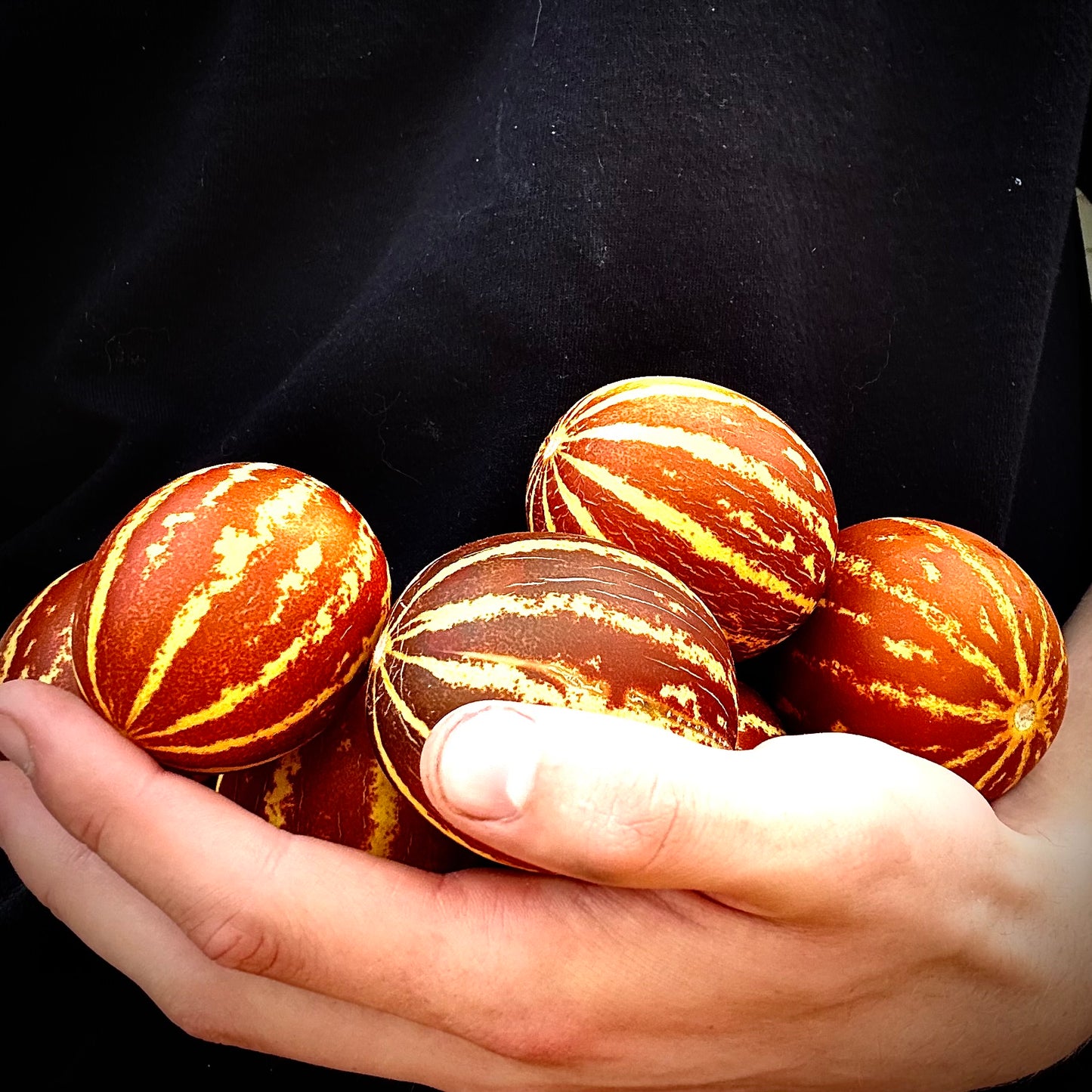
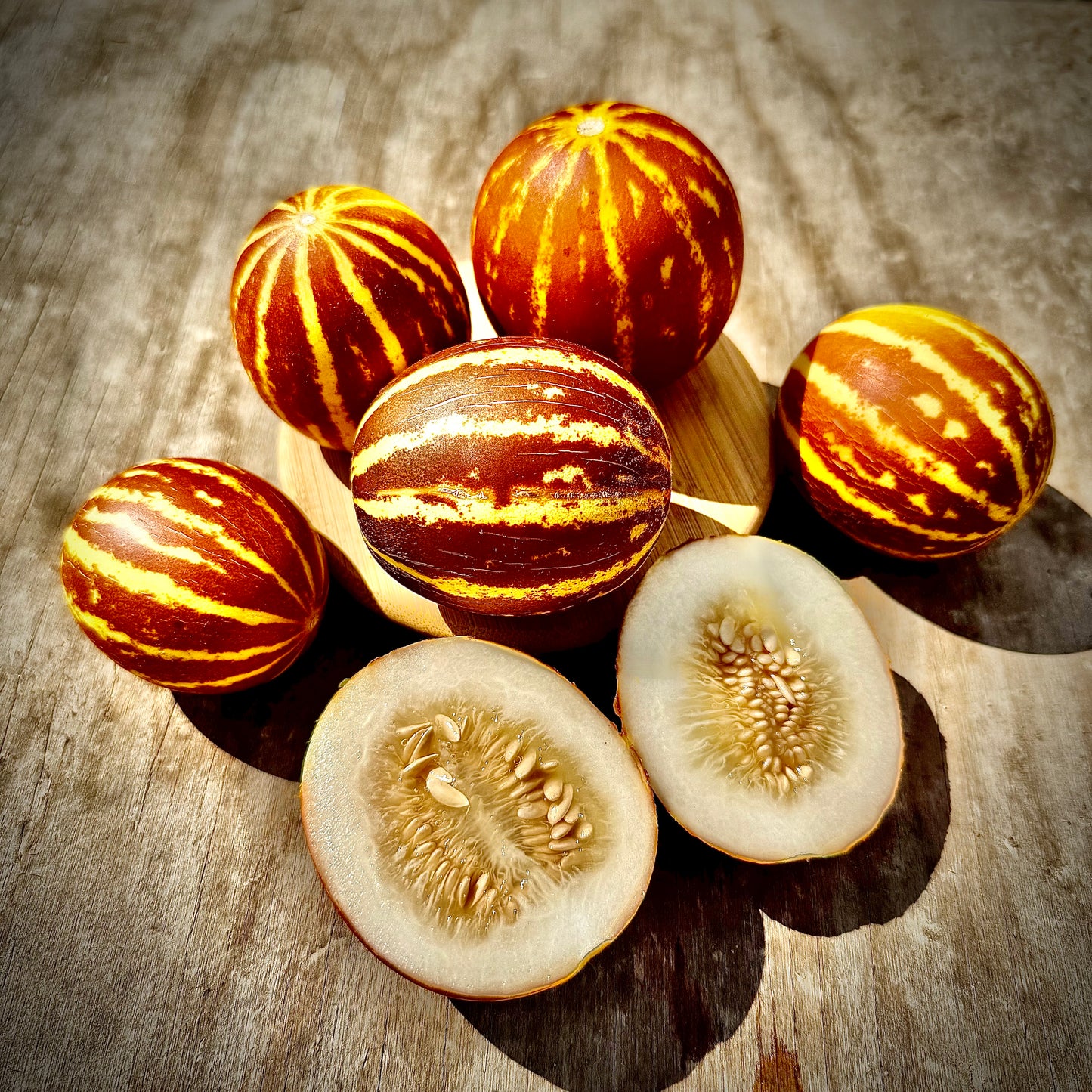
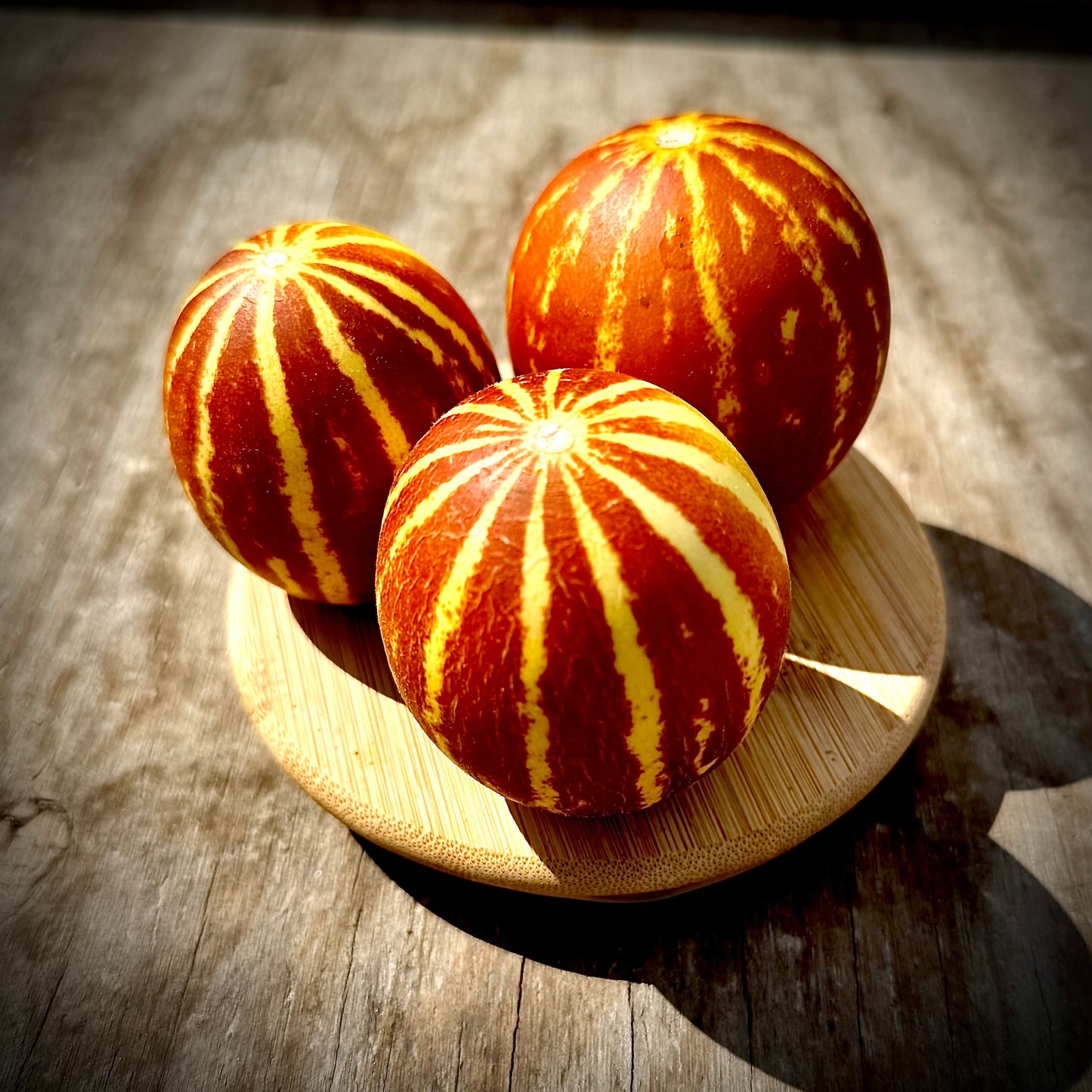
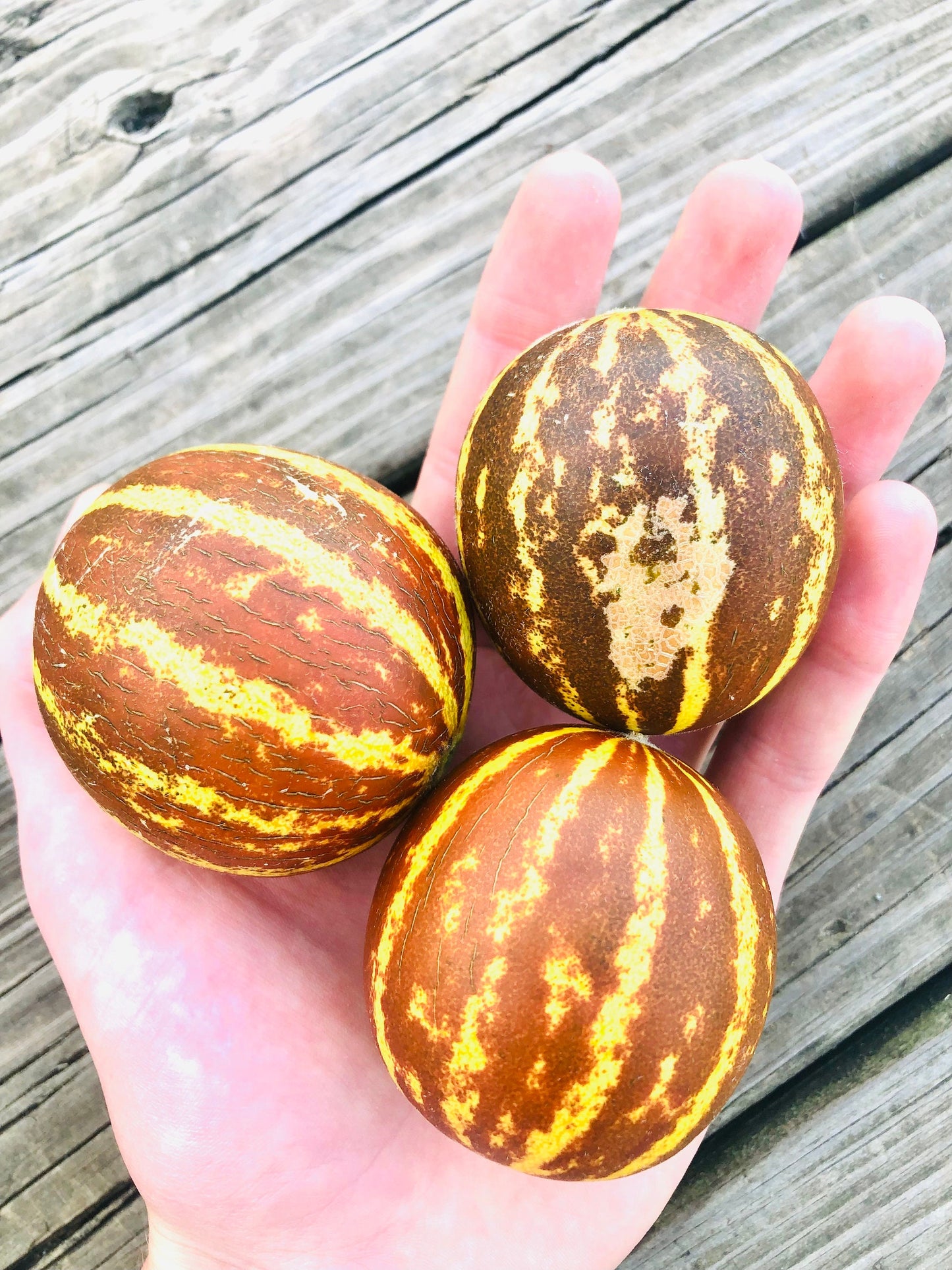
Rich Sweetness 132 is perhaps the absolute smallest melon in the world! It is by far the most unique Melon variety that we have ever grown! fruits get about the size of a tennis ball, but don't let the size fool you, as this melon packs big taste! Super sweet, juicy, with a thin rind! The flesh is very smooth, and creamy, and is perfect for deserts and recipes! These mini melons are highly productive, with vines getting around 7 ft. tall! Grow these up a trellis, or some type of support system for maximum yield. This variety will turn any ordinary garden layout, into a whimsical eye appealing fantasy land! Rare variety, that produces an abundant crop early in the season!
Quick facts (at a glance)
-
Variety: Rich Sweetness 132 (aka Sweet Russian Striped). Origin: former Soviet Union; an ornamental / personal-size melon with vivid red/yellow striped rind and very sweet, white to honeydew-like flesh.
-
Fruit size & habit: typically tennis-ball to grapefruit size (very small — personal melons). Compact vines (often ~6–8 ft).
-
Days to maturity: about ~80 days from sowing (varies with climate).
Before you plant — site & soil
-
Sun & warmth: Full sun only (6–8+ hours). Melons need heat to develop sugars.
-
Soil: Fertile, well-drained loam; pH 6.0–7.0 preferred. Work in plenty of compost for organic matter.
-
Soil temperature (critical): Wait until soil at planting depth is ≥60°F (optimal 70–85°F for many muskmelons). Cold soil slows germination and stresses seedlings. Use black plastic mulch or raised beds to warm soils earlier.
Planting (two options: direct sow or transplants)
Direct sow (recommended in warm areas):
-
Plant after all danger of frost and after soil is warm (see above).
-
Sow ¼–1 inch deep (many guides: ½–1"). Plant 2–3 seeds per hill, 18–24 inches between plants in-row, rows 5–6 ft apart — or plant hills 4–6 ft apart depending on space. Thin to the strongest 1–2 plants per hill after true leaves appear.
Transplanting (cooler climates / earlier start):
-
Start indoors 3–4 weeks before the last frost in 3–4" pots; keep warm (use heat mat, 75–85°F bottom temp) and fairly dry (overwatering causes leggy roots). Harden off for 7–10 days before planting out. Transplant after soil temp is warm.
Spacing & training
-
In-ground: For personal/mini melons like Rich Sweetness 132, you can plant more densely than large cantaloupes: 18–24" between plants in row; 5–6 ft between rows is common. If planting hills, place hills ~3–4 ft apart and thin to 1–2 plants/hill.
-
Trellising (recommended): Because fruits are small and vines are relatively compact (~6–8 ft), these melons do very well trellised — saves space, improves air circulation, and keeps fruit clean. Use sturdy netting or slings (support the fruit with a cloth/mesh sling as it grows).
Fertility & fertilizing
-
Pre-plant: mix compost and a balanced granular fertilizer into the bed. Melons like moderate nitrogen early, then higher phosphorus & potassium as fruits set. Target a soil test if possible.
-
Side-dress or fertigate: when vines begin to run and again at first fruit set. Avoid excessive nitrogen after vines are established (it promotes foliage at the expense of fruit).
Watering
-
Consistent moisture is key for good texture and sweetness: about 1 inch of water per week, more in hot, dry weather and heavy fruit set. Drip irrigation under mulch is ideal to keep foliage dry (reduces disease) and deliver steady moisture. Reduce watering slightly as fruit approaches maturity to concentrate sugars, but don’t let fruit shrivel.
Pollination
-
Melons have separate male and female flowers and need bees/other pollinators for good fruit set. Avoid insecticides during bloom; consider planting pollinator flowers nearby if pollinator activity is low.
Pests & diseases (common issues & quick fixes)
-
Pests: cucumber beetles, squash vine borer, aphids, slugs. Row covers protect seedlings early (remove at bloom for pollination). Handpick or use targeted controls for cucumber beetles; use sticky traps or insecticidal soaps for aphids.
-
Diseases: powdery mildew, downy mildew, fusarium/wilt — provide good air flow, rotate crops, use mulch and drip irrigation, remove diseased plants, practice 3-year crop rotation if possible. Trellising reduces disease incidence.
Harvesting — when to pick
For Rich Sweetness 132 (personal-size cantaloupe-type), the best harvest cues are the same as for muskmelons:
-
Aroma: a sweet, musky fragrance at the stem (blossom) end is a prime indicator.
-
Stem/tendril: the nearest tendril(s) to the fruit may brown and dry; in slip-type melons the fruit may detach easily with light pressure (full or 3/4 slip). Not all melons fully “slip,” but scent + color change + drying tendril is reliable.
-
Color & texture: most netted cantaloupes change under-net color from green to creamy/tan; small personal melons may show rind color change or a more pronounced aroma.
Harvest tip: If unsure, pick one sample fruit and taste. These melons are prized for aroma & sweetness — better to wait for scent than harvest on calendar alone.
Share
i finally got the seeds
Great
I was reading about how bad your seed packets were I have no clue what they were talking about I was worried about ordering but once I received your seeds there in a air tight envelope and there’s no problem with it & there’s no way that any of the seeds could come out your package is great thank you very much
Grew an ok number of melons. Mo matter level of ripeness, they here unpalatable. Waste of money and time.
Cannot give a review until seeds grow and produce fruit. Getting the package of seeds to the post office was slow.