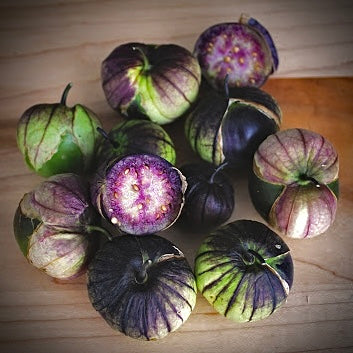
Tomatillo - Purple Coban
Tomatillo - Purple Coban
Couldn't load pickup availability
Minimum Seed Count: 15
Purple Coban combines rich color, heirloom history, and incredible flavor. Originating from the highlands of Guatemala near the city of Cobán, this rare variety produces a twist to the common green tomatillo! Beautiful deep purple fruits wrapped in papery husks. The fruits offer a complex sweet-tart flavor that is excellent for fresh salsa, sauces, roasting, and traditional Latin American dishes. Productive plants yield heavily throughout the season, making Purple Coban a standout in both the garden and the kitchen.
Plant Details
- Species: Physalis philadelphica
- Plant Type: Annual warm-season crop
- Days to Maturity: 75–90 days
- Plant Height: 3–5 feet
- Fruit Color: Deep purple
- Growth Habit: Large, sprawling, highly productive plants
Growing Guide
Starting Seeds
- Start seeds indoors 6–8 weeks before your last expected frost date.
- Sow seeds ¼ inch deep in seed-starting mix.
- Maintain soil temperatures between 70–80°F.
- Germination typically occurs within 7–14 days.
Transplanting
- Harden off seedlings before planting outdoors.
- Transplant after all danger of frost has passed.
- Space plants 24–36 inches apart.
Growing Conditions
- Full sun (6–8+ hours daily)
- Rich, well-drained soil
- Consistent moisture throughout the season
- Mulch to conserve moisture and reduce weeds
Care
- Plant at least two tomatillo plants for reliable pollination and fruit set.
- Support plants with cages or stakes if needed.
- Fertilize moderately throughout the growing season.
Harvesting
- Harvest when the papery husks fill completely and begin to split.
- Fruits should be fully colored and firm.
- Regular harvesting encourages continued production.
History
Purple Coban traces its origins to the Cobán region of Guatemala, where it has been cultivated as a traditional heirloom crop for generations. Unlike the more common green tomatillos, Purple Coban was selected for its rich coloration and distinctive flavor. Its preservation through local farming communities has helped maintain an important piece of Central American agricultural heritage.
Share