


1
/
of
2
Tomato - Dark Knight
Tomato - Dark Knight
Regular price
$4.50
Regular price
Sale price
$4.50
Unit price
/
per
Couldn't load pickup availability
Minimum Seed Count: 10
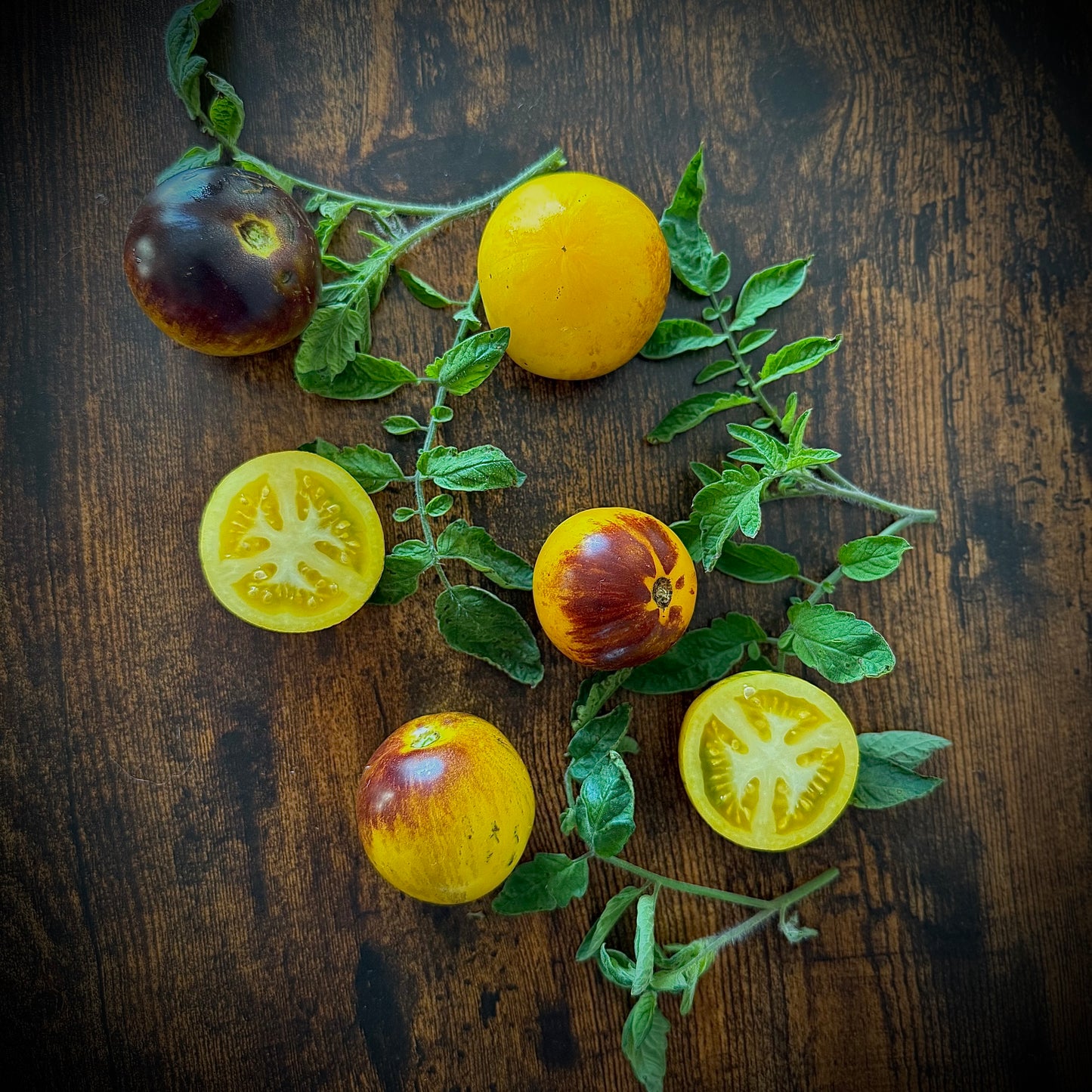
The Dark Knight tomato is a dramatic and flavorful variety, prized for its deep purple to nearly black shoulders that contrast beautifully with its bright banana yellow base. Medium in size at about 4-5 ounces, this tomato has a smooth, glossy skin and firm, juicy flesh inside. Its flavor balances sweet and tangy notes with a complex, creamy undertone that makes it perfect for fresh eating, slicing, or adding depth to salads and sauces. A Very rare variety with us being one of the only suppliers!! Indeterminate
🌱 Planting Guide:
- Seed Starting: Begin indoors 6–8 weeks before your last expected frost. Sow seeds ¼ inch deep in a quality seed-starting mix. Keep soil temperatures between 70–80°F for best germination.
- Transplanting: Harden off seedlings before moving outdoors. Transplant after danger of frost has passed, when night temps stay above 55°F. Space plants 24–36 inches apart in rows 3–4 feet apart.
- Sun & Soil: Requires full sun (6–8+ hours daily). Prefers well-drained, fertile soil enriched with compost. Ideal soil pH is 6.0–6.8.
- Support: Provide strong stakes or cages, as plants grow tall and produce heavy fruit clusters.
- Watering: Keep soil consistently moist but not waterlogged. Deep, regular watering is best to encourage strong roots and prevent blossom end rot. Mulching helps retain soil moisture and regulate temperature.
- Fertilization: Apply a balanced fertilizer at transplanting, then side-dress with a tomato-specific fertilizer during flowering and fruit set. Avoid excessive nitrogen, which can cause lush foliage with fewer fruits.
- Harvesting: Fruits mature in about 80–85 days from transplant. Harvest when shoulders darken to a deep purple-black and the lower half ripens to yellow. Flavor is best when fully vine-ripened.
- Tips: Prune suckers for improved airflow and stronger fruit production. Rotate planting locations each year to reduce disease pressure.
Share
No reviews

<div class="dynamic-checkout__content" id="dynamic-checkout-cart" data-shopify="dynamic-checkout-cart"> <shopify-accelerated-checkout-cart wallet-configs="[{"supports_subs":true,"supports_def_opts":false,"name":"shop_pay","wallet_params":{"shopId":70784516335,"merchantName":"Beebe Seed Co","personalized":true}},{"supports_subs":true,"supports_def_opts":false,"name":"paypal","wallet_params":{"shopId":70784516335,"countryCode":"US","merchantName":"Beebe Seed Co","phoneRequired":false,"companyRequired":false,"shippingType":"shipping","shopifyPaymentsEnabled":true,"hasManagedSellingPlanState":false,"requiresBillingAgreement":false,"gatewayType":"MANAGED","merchantId":"YQLEMKW8332YA","sdkUrl":"https://www.paypal.com/sdk/js?components=buttons\u0026commit=false\u0026currency=USD\u0026locale=en_US\u0026client-id=AbasDhzlU0HbpiStJiN1KRJ_cNJJ7xYBip7JJoMO0GQpLi8ePNgdbLXkC7_KMeyTg8tnAKW4WKrh9qmf\u0026merchant-id=YQLEMKW8332YA\u0026intent=authorize","serviceableCountryCodes":["CA","DE","FR","GB","US"]}}]" access-token="e5bec43fda568302821c5cdb9ca0e11f" buyer-country="US" buyer-locale="en" buyer-currency="USD" shop-id="70784516335" cart-id="48f0c6786c4bf3c1e79e50e8a75cebad" enabled-flags="["a1d1f9a1"]" > <div class="wallet-button-wrapper"> <ul class='wallet-cart-grid wallet-cart-grid--skeleton' role="list" data-shopify-buttoncontainer="true"> <li data-testid='grid-cell' class='wallet-cart-button-container'><div class='wallet-cart-button wallet-cart-button__skeleton' role='button' disabled aria-hidden='true'> </div></li><li data-testid='grid-cell' class='wallet-cart-button-container'><div class='wallet-cart-button wallet-cart-button__skeleton' role='button' disabled aria-hidden='true'> </div></li> </ul> </div> </shopify-accelerated-checkout-cart> </div>